9 facts about NUCLEUS: Dedomena's Synthetic Data generation software
In an era defined by rapid technological progress and the critical role of data-driven decisions, the demand for high-quality and diverse datasets has surged. However, the challenges of accessing real-world data due to privacy concerns, limited availability, or complex collection processes have led to the rise of synthetic data.
This resourceful approach enables the creation of reliable, realistic, and privacy-preserving datasets. By harnessing AI-powered synthetic data generators like Dedomena's NUCLEUS, you can create comprehensive, balanced, and authentic versions of your original data.
NUCLEUS: The Core Component
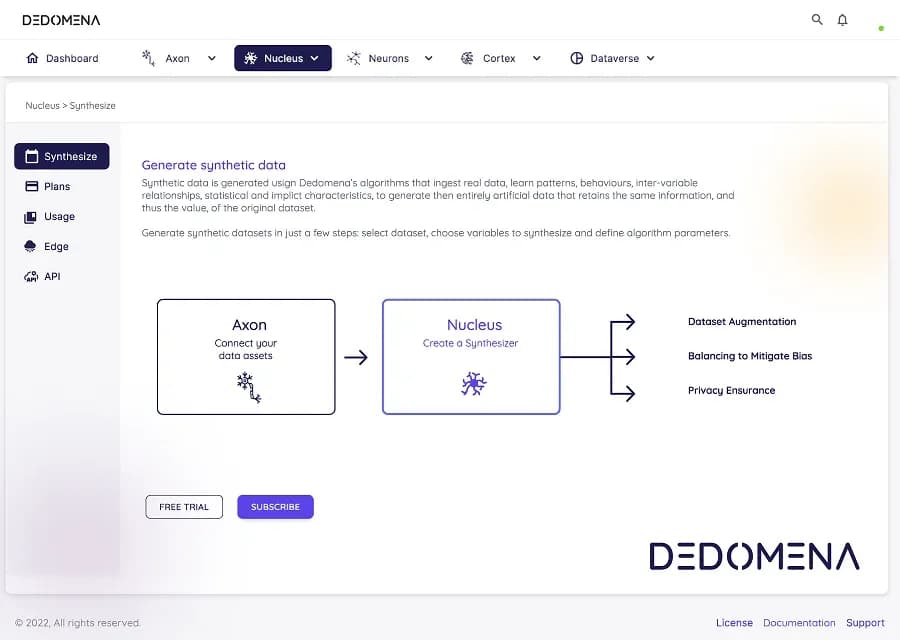
At the heart of Dedomena's platform lies NUCLEUS, a pivotal component that facilitates the training of synthesizers for generating limitless synthetic data copies. This cutting-edge technology can be harnessed within Dedomena's platform or via the NUCLEUS EDGE module, empowering seamless data synthesis.
To fully navigate the landscape of NUCLEUS, it's crucial to grasp the fundamental facts that underpin its exceptional capabilities:
1. Edge Computation: Where Data Synthesis Meets Flexibility
NUCLEUS pioneers edge computation capabilities via the Nucleus Edge library. This enables data synthesis from any location, serving as an invaluable asset for scenarios requiring real-time processing, privacy preservation, or reduced latency.
2. Privacy-by-Design: Safeguarding Sensitive Information
The foundation of NUCLEUS rests on a privacy-by-design approach. This principle ensures that privacy considerations are embedded throughout the synthesis journey. By excluding sensitive details while maintaining statistical accuracy, NUCLEUS crafts data that respects regulatory mandates.
3. Multi-Table Synthesis: Fidelity in Complex Relationships
NUCLEUS goes beyond single-entity data synthesis. It excels in generating interrelated tables, capturing the intricate relationships present in real-world databases. This maintains context and authenticity, crucial for training AI models that interact with multifaceted datasets.
4. High-Quality Data: The Pillar of Effective Training
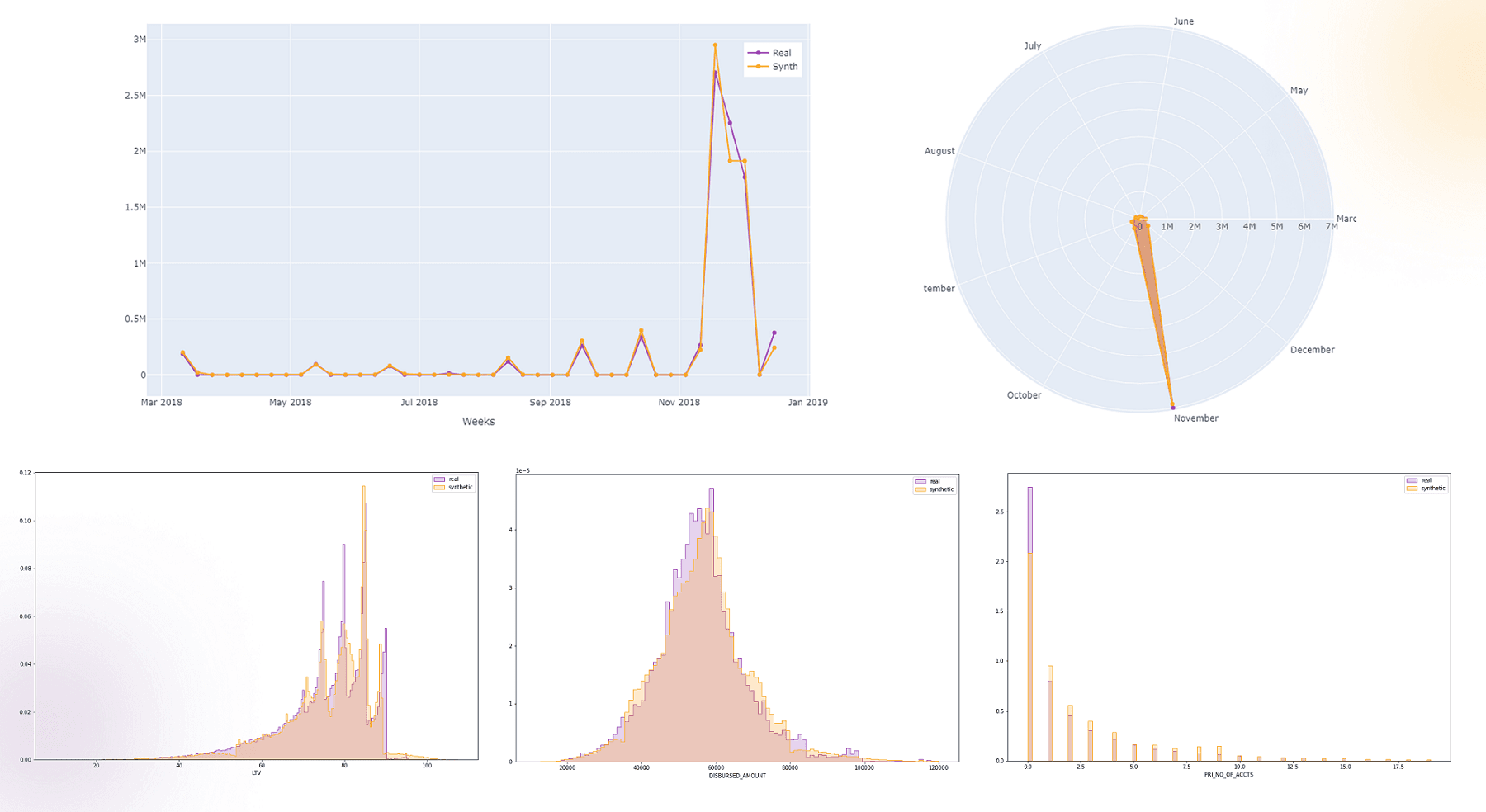
Quality reigns supreme. By closely replicating statistical properties and data distributions, NUCLEUS ensures that machine learning models glean pertinent insights, yielding dependable outcomes in AI and software development.
5. GPU Performance Optimization: Speeding Ahead
Handling extensive datasets efficiently is imperative. NUCLEUS harnesses GPU performance optimization to expedite data synthesis. This acceleration translates to rapid experimentation and agile iteration.
6. Specialized Algorithms for Tailored Solutions
NUCLEUS boasts a suite of specialized algorithms, tailored for diverse domains such as transactional data, time series, and natural language processing (NLP). This bespoke approach ensures synthetic data aligns with your application's unique demands.
7. Data Diversity: Robustness through Variety
Data diversity combats bias and overfitting. NUCLEUS meticulously simulates an array of scenarios, fostering robust models that can adeptly navigate real-world complexities beyond controlled environments.
8. Quality and Utility Assurance: Elevating Standards
Maintaining data quality is paramount. NUCLEUS rigorously enforces this through a comprehensive Quality Assurance (QA) process. This scrutiny guarantees that the synthetic data faithfully serves its intended purpose.
9. Seamless Integration and Format Diversity
Connecting disparate data sources, platforms, and cloud environments is effortless. NUCLEUS's versatility extends to diverse file formats, allowing for data-driven insights irrespective of the origin of the information.
As organizations continue to recognize the importance of the synthetic revolution, NUCLEUS stands as the bedrock for successful AI development, driving innovations that reshape industries and open doors to uncharted possibilities.